Why Edge Devices are the Backbone of Real-Time Digital Systems

The Shift from Data Collection to Decision Making

For a long time, connected devices were treated as simple data collectors. Sensors captured information and sent everything to the cloud for processing. That model no longer works on scale.

Modern systems operate in environments where latency, reliability, cost, and privacy matter. This has pushed intelligence closer to where data is generated. This is where edge devices come in.


What Are Edge Devices

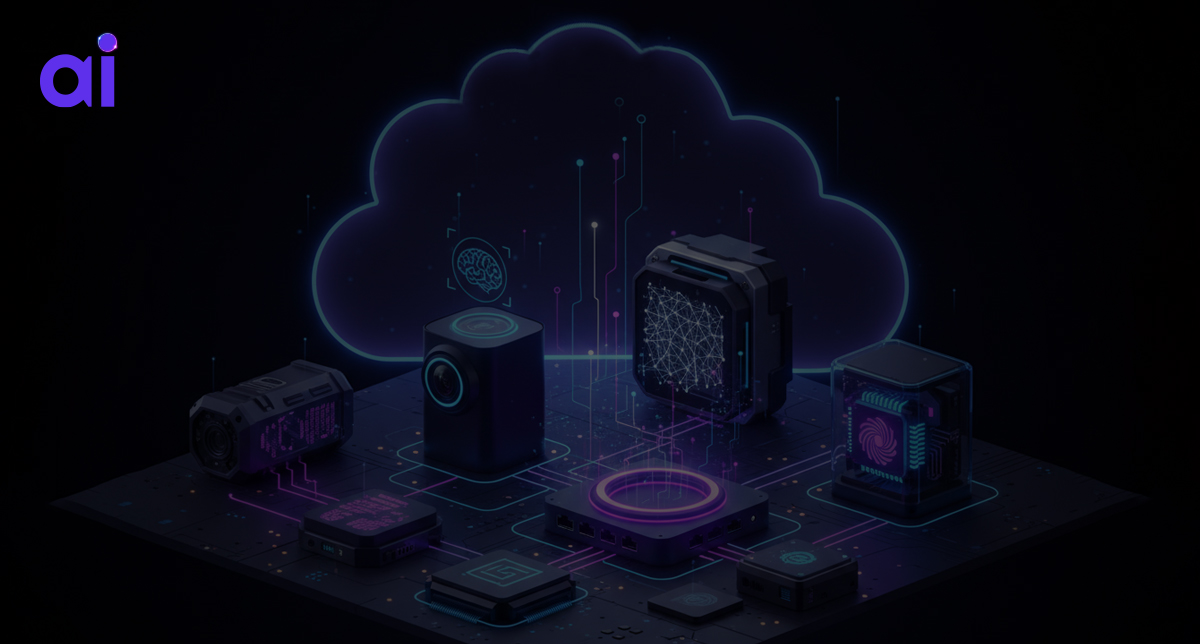
Edge devices are physical devices that perform computation close to the data source. They do more than collect data. They process it, apply logic, and make decisions locally.
Examples include:

  • Industrial sensors
  • Smart cameras
  • IoT gateways
  • Edge servers
  • Embedded compute units inside machines

An edge device acts as a local decision point within a larger system.


Why Edge Devices Exist

Edge devices exist because centralized processing creates real limitations.
Cloud based systems introduce:

  • Latency from network round trips
  • High bandwidth costs from raw data transfer
  • Dependency on constant connectivity
  • Increased exposure of sensitive data

Edge devices reduce these issues by handling critical processing locally and sending only relevant information to the cloud.


What Edge Devices Actually Do

Edge devices typically perform three core functions.

  1. Local Processing: Raw data is analyzed close to the source. This reduces response time and network usage.
  2. Real Time Decision Making: Rules or machine learning models run locally to trigger actions immediately.
  3. Selective Data Transmission: Only meaningful events, summaries, or alerts are sent to the cloud.

This shifts systems from reactive to responsive.


Edge Devices in Real World Systems

Edge devices are already foundational across industries.

  • In manufacturing, they detect equipment anomalies and safety issues in real time.
  • In smart buildings, they optimize energy usage and monitor occupancy locally.
  • In healthcare, they enable rapid alerts from patient monitoring systems.
  • In retail, they process in store analytics without streaming all data externally.

In each case, edge devices allow systems to function reliably even when connectivity is limited.


Edge Devices and the Cloud Work Together

Edge devices do not replace the cloud. They complement it.
Edge devices handle:

  • Immediate decisions
  • Local processing
  • Operational continuity

The cloud handles:

  • Aggregated analytics
  • Long term storage
  • System wide insights
  • Model training

Well-designed systems distribute intelligence instead of centralizing it.


Why Edge Devices Matter Now

Several forces are accelerating the adoption of edge devices:

  • Growth of IoT deployments
  • Demand for real time systems
  • Rising cloud data transfer costs
  • Stronger privacy and data locality requirements
  • Increasing use of AI at the edge

Edge devices are no longer optional components. They are becoming standard building blocks.


Conclusion

Edge devices represent a shift in how smart systems are designed. By moving intelligence closer to where data is generated, organizations build systems that are faster, more resilient, and more cost effective. The future of digital systems lies in distributed intelligence, not centralized processing.

Leave a Reply

Your email address will not be published. Required fields are marked *

Commonly asked questions and answers

Phone:
+91 7770030073
Email:
info@shwaira.com

Stay Ahead of What’s Actually Building!

Subscribe for concise updates on AI-driven platforms, data infrastructure, IoT systems, and execution patterns we use across complex deployments.

Have more questions?

Let’s schedule a short call to discuss how we can work together and contribute to the success of your project or idea.