Why Cloud Alone Is No Longer Enough

THE SHIFT IN HOW SYSTEMS THINK

For years, cloud computing has been the default foundation for digital systems.

Centralized processing, elastic scaling, and global access made it the obvious choice. But as digital systems expanded into physical environments, new challenges emerged.

Factories, hospitals, cities, and immersive environments generate continuous, high-volume data. Sending everything to distant cloud servers introduces delays, cost inefficiencies, and operational risk.

Modern systems do not just need scale. They need proximity. This is where Edge Technology becomes critical.


THE LIMITATIONS OF CLOUD-ONLY ARCHITECTURES

Cloud platforms are optimized for centralized workloads. Real-world environments demand something different.

Common challenges with cloud-only systems include:

  • Latency that affects real-time decision making
  • High bandwidth consumption from raw data streams
  • Dependency on stable network connectivity
  • Rising infrastructure and data transfer costs
  • Increased exposure of sensitive data

When systems interact with the physical world, delays are not acceptable.

Article content

WHAT EDGE TECHNOLOGY ENABLES

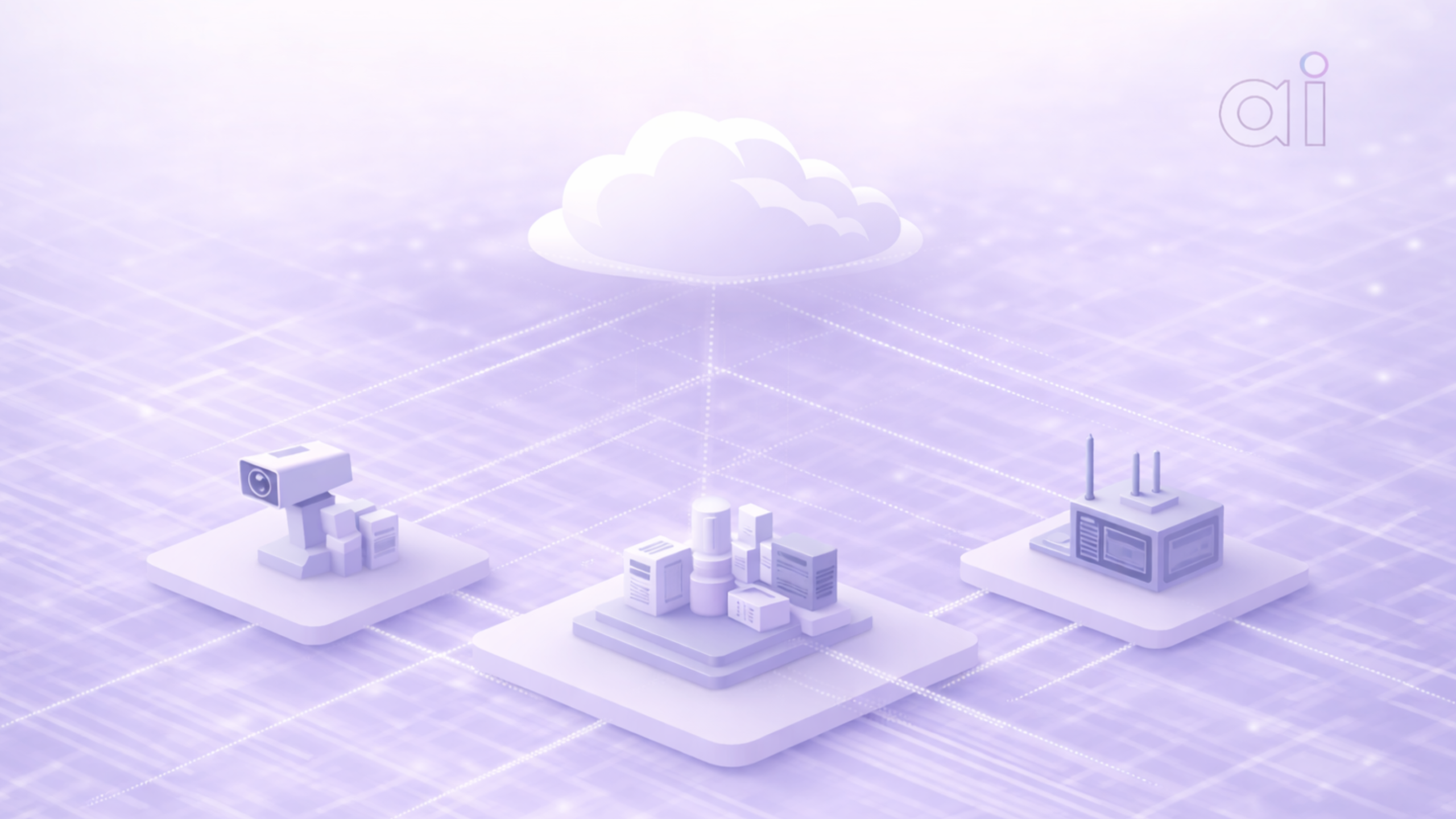
Edge Technology moves computation closer to where data is generated.

Instead of transmitting raw data continuously, edge systems process information locally or nearby. They analyze, filter, and act on data in real time.

Only meaningful insights are sent to the cloud.

This approach enables:

  • Faster response times
  • Reduced bandwidth usage
  • Improved system reliability
  • Better data governance

Edge does not replace the cloud. It changes how the cloud is used.


EDGE DEVICES AS DECISION POINTS

Edge devices are no longer passive data collectors.

They actively process information and trigger actions. Examples include:

  • Smart cameras detecting safety violations
  • Industrial gateways monitoring equipment health
  • Sensors identifying anomalies in real time
  • XR devices processing immersive data locally

By shifting intelligence to the edge, systems become more responsive and resilient.

Article content

HOW EDGE AND CLOUD WORK TOGETHER

The most effective architectures today combine edge and cloud capabilities.

Edge handles:

  • Real-time processing
  • Local decision making
  • Data filtering and prioritization

Cloud handles:

  • Aggregated analytics
  • Long-term storage
  • Model training
  • Enterprise dashboards

This hybrid approach balances speed, scale, and cost.


REAL-WORLD IMPACT ACROSS INDUSTRIES

Edge Technology is already delivering value across domains.

Manufacturing uses edge for predictive maintenance and worker safety.  Healthcare relies on edge for patient monitoring and timely alerts.  Retail applies edge for real-time insights and operational intelligence.  XR systems depend on edge for low-latency immersive experiences.

In each case, edge brings decisions closer to action.


WHY EDGE MATTERS NOW

Several forces are accelerating adoption:

  • Growth of AI-driven workloads
  • Proliferation of connected devices
  • Demand for real-time systems
  • Increasing cloud cost pressures
  • Stronger data privacy requirements

Edge Technology is becoming a foundational architectural layer.


CONCLUSION

Digital systems are moving out of data centers and into the real world. Edge Technology enables systems to think locally, act faster, and operate reliably under real-world constraints. Cloud remains essential, but it is no longer sufficient on its own.
The future belongs to architectures that combine edge intelligence with cloud scale.

Leave a Reply

Your email address will not be published. Required fields are marked *

Commonly asked questions and answers

Phone:
+91 7770030073
Email:
info@shwaira.com
Most teams struggle not with lack of technology, but with too many options like - AI, automation, IoT, digital twins, XR, cloud, edge.
Choosing incorrectly often leads to overbuilt or fragile systems.

How Shwaira helps:
  • Shwaira begins by identifying the decision, process, & system behavior that needs improvement.
  • We then assess data availability, latency requirements, reliability constraints, and operational risk before defining the technology mix.
  • This ensures AI, automation, or simulation is introduced only where it creates real system value.
In most cases, no.
Many systems fail not because they are outdated, but because they lack observability, automation, or intelligence.

How Shwaira helps:
  • Shwaira designs architectures that extend existing platforms, devices, and data pipelines.
  • We integrate intelligence & automation incrementally to modernize systems without disrupting live operations or forcing risky, large-scale replacements.
A common failure pattern is moving too quickly from concept to full rollout without validating performance, data integrity, or integration complexity.

How Shwaira helps:
  • Shwaira validates systems early through structured prototypes, technical spikes, and controlled pilots.
  • We test data pipelines, decision logic, system load, and integration boundaries before scaling, so production systems behave predictably under real-world conditions.
AI is powerful, but not always the most reliable or cost-effective choice.
Many production systems benefit more from deterministic logic, automation, or edge processing, with AI applied selectively.

How Shwaira helps:
  • Shwaira designs hybrid systems to combine AI models, rules, automation, and simulations where each fits best.
  • This results in systems that are explainable, resilient, and easier to operate long term.

Stay Ahead of What’s Actually Building!

Subscribe for concise updates on AI-driven platforms, data infrastructure, IoT systems, and execution patterns we use across complex deployments.

Have more questions?

Let’s schedule a short call to discuss how we can work together and contribute to the success of your project or idea.