Validate your AI or Platform Idea in 40 Engineering hours. Talk to our Expert →

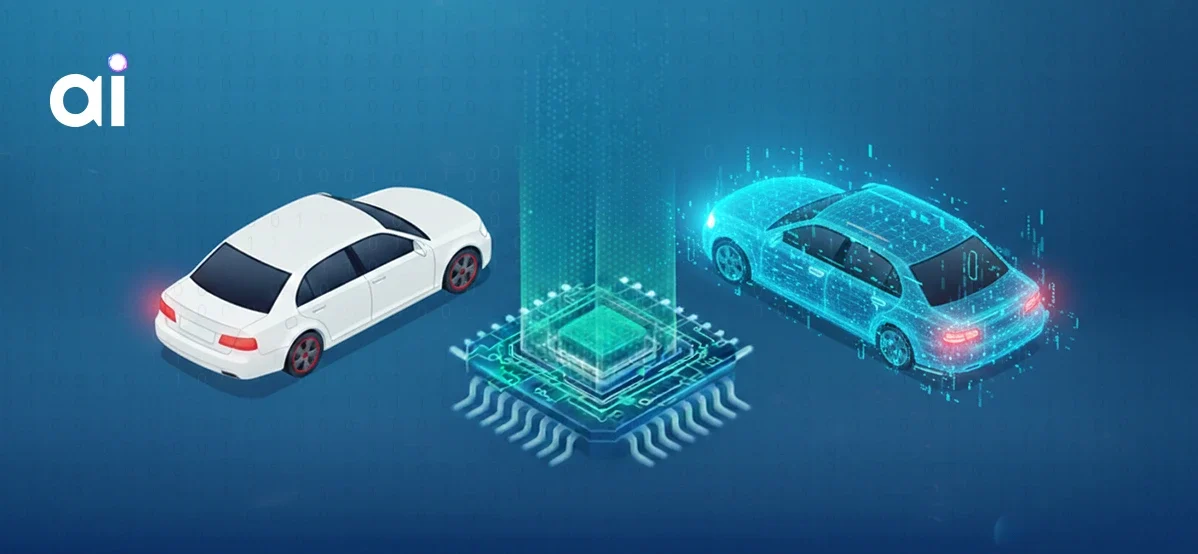
Digital twins are often introduced as advanced visualizations.
A 3D model. A real-time dashboard. A live replica of a physical system. This framing is incomplete and misleading. Visualization is a byproduct of a digital twin, not its purpose.
Many systems labeled as digital twins are essentially visual layers connected to data streams.
They show:
These systems help teams see what is happening.
But seeing is not the same as understanding, predicting, or acting.
A visualization-only system answers: “What does the system look like right now?”
A true digital twin answers: “What will happen next, and what should be done about it?”
A digital twin is a living system model that mirrors the behavior of its physical counterpart.
It combines:
The twin is not static. It evolves as the physical system evolves.
Visualization exists to make the model intelligible to humans, not to define the system itself.
Visualization-only systems fail in production because they:
They are observational, not operational.
In real-world environments, this creates a dangerous gap. The system can show a problem clearly but cannot prevent it.
The defining capability of a digital twin is reasoning.
A true digital twin can:
Visualization helps humans trust the system. Reasoning makes the system useful.
The gap between visualization and true digital twins appears when systems are stressed.
Examples:
Visualization systems inform. Digital twins intervene.
That difference determines whether systems merely report incidents or actively prevent them.
Digital twins require timely, reliable state updates.
When data must travel long distances or wait for centralized processing, the twin becomes stale.
Edge processing allows:
The twin remains accurate because decisions happen close to reality.
Visualization is still essential.
But its role is:
Not replacing intelligence.
A digital twin without reasoning is a dashboard.
A digital twin with reasoning becomes an operational system.
Calling digital twins visualization tools understates their value and misguides their design.
Digital twins are not about seeing systems. They are about understanding, simulating, and shaping system behavior. Visualization makes them visible. Intelligence makes them matter.