Validate your AI or Platform Idea in 40 Engineering hours. Talk to our Expert →

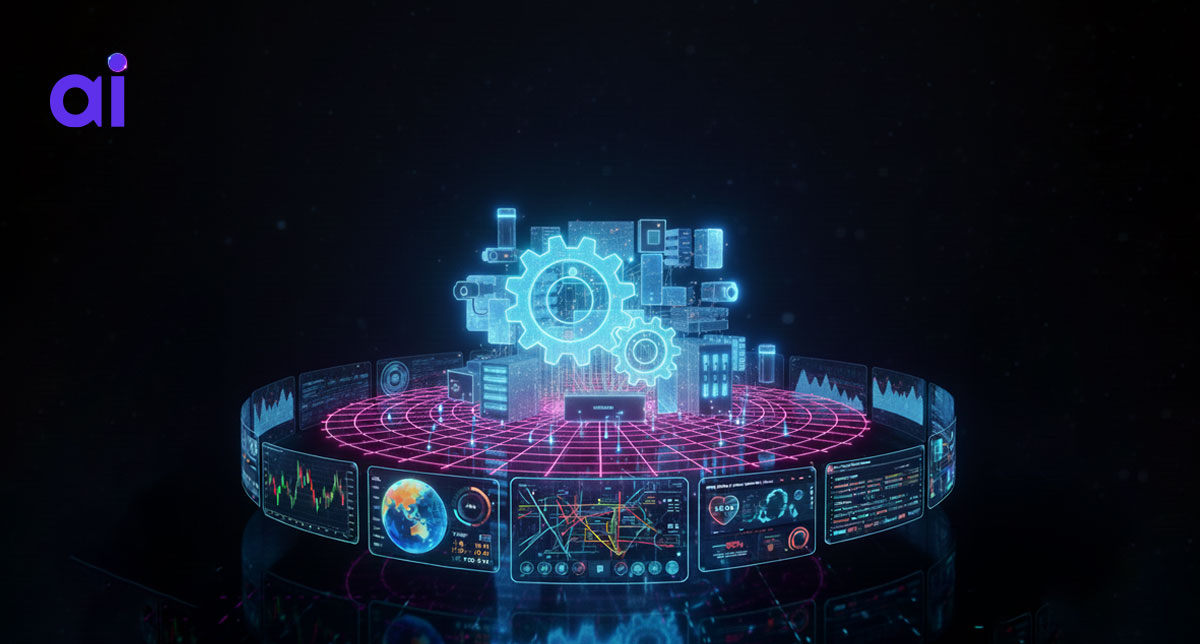
Modern digital systems are more observable than ever.
Dashboards update in milliseconds. Metrics stream continuously. Alerts fire instantly. From the outside, it appears that organizations have achieved real-time control.
In practice, many systems still respond too late.
The problem is not visibility. The problem is where and how decisions are made.
Real-time visibility creates a sense of confidence.
Teams can see:
But visibility only answers one question: What is happening right now?
It does not answer:
When visibility is mistaken for decision-making capability, systems appear intelligent while remaining reactive.
In many architectures, the decision path looks like this:
Each step adds latency.
Even when data arrives instantly, decisions are gated by distance, workflows, and human response time.
This is not a tooling issue. It is an architectural one.
A common failure mode in production systems is this:
The system can detect problems faster than it is allowed to act on them.
Examples include:
In these cases, the system knows something is wrong but lacks authority to respond.
The result is delayed mitigation, higher risk, and avoidable impact.
Dashboards are observational by design.
They are optimized for:
They are not optimized for:
When dashboards become the primary control mechanism, systems rely on human reaction speed. For real-time environments, that is often too slow.
The key question is not how fast data moves.
It is where decisions live.
If decision logic exists:
Then real-time visibility will never produce real-time outcomes.
Real-time decision-making requires decision logic to be placed close to where events occur.
Systems that respond effectively share a common trait:
They do not stop at visibility.
They:
Human oversight still exists, but it supervises outcomes rather than executing every action.
This shift is what separates monitored systems from responsive systems.
The evolution is subtle but critical:
This is where edge architectures, local processing, and event-driven design become essential.
Not to replace visibility, but to complete it.
Seeing a problem early does not prevent impact. Acting early does.
Real-time visibility is valuable. Real-time decision-making is transformative.
Systems that confuse the two remain reactive, no matter how advanced their dashboards appear.