Validate your AI or Platform Idea in 40 Engineering hours. Talk to our Expert →

Moving beyond static “digital twins” to immersive, real-time environments that predict failures, optimize workflows, and train teams without risk.
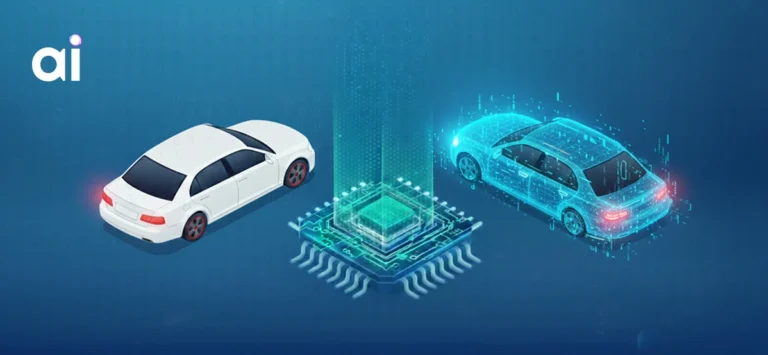
For years, “Digital Twins” have been the gold standard for industrial modernization. Having a static 3D representation of an asset was a major step forward. But in an era demanding unprecedented speed and efficiency, static models are no longer enough.
Industry is now moving toward next-generation operational intelligence: dynamic, immersive, and interconnected real-time 3D environments. This is the Industrial Metaverse.
It is not about virtual gaming or social avatars.nbsp;It is a serious, high-impact evolution of industrial strategy that enables organizations to visualize, interact with, and optimize complex operations through high-fidelity digital replicas powered by live connectivity.
Here is how advanced industrial simulation is changing the game for manufacturing, logistics, and construction.
The core differentiator of modern industrial simulation is life. We aren’t just building 3D models; we are building immersive industrial worlds where physical assets, machines, and processes are mirrored in real time.
This is achieved through a convergence of technologies:
The result is a shared virtual space where distributed teams: engineers, stakeholders, and operators can meet to monitor live operations and collaborate as if they were onsite together.
Implementing an Industrial Metaverse strategy isn’t just a technical upgrade; it directly impacts the bottom line by shifting organizations from reactive to predictive postures.
The primary business impacts include:
How does this technology translate into daily operations? Here are the core functional areas where simulation is delivering value today:
Building these complex industrial worlds requires a robust, open technology stack. We leverage leading platforms designed for interoperability and scale, including NVIDIA Omniverse for collaborative world-building and Alliance for OpenUSD (AOUSD) to ensure data flows seamlessly between different 3D tools.
By combining the rendering power of game engines, the connectivity of IoT platforms, and the horsepower of Cloud and Edge computing ( Amazon Web Services (AWS) , Microsoft Azure, NVIDIA Robotics ), we can deliver simulations that are both photorealistic and data-accurate.
The Industrial Metaverse is bridging the gap between the physical and digital worlds, providing a new lens through which we view operational excellence.
Organizations that adopt these immersive tools will not just be more efficient; they will be safer, faster, and more resilient to disruption.
If you are ready to unlock next-generation operational intelligence, it’s time to explore the potential of industrial simulation with us.